



Why Labret Length Is the Most Misordered Spec in Wholesale
Labret studs are sold by three numbers: gauge (thickness), post length, and top/disc size. Buyers almost never get gauge wrong — but post length causes more returns and dead stock than any other parameter. A post that is too short swallows the disc into swollen tissue; a post that is too long sticks out, snags on clothing and migrates. This guide is the millimeter-level reference we use in our own factory for flat-back labret production.
The Millimeter Matrix by Placement
Wearable length is measured from the inside of the flat disc to the top of the threaded or press-fit end, excluding the decorative top.
| Placement | Standard healed length | Notes |
|---|---|---|
| Earlobe | 6 mm–8 mm | Thicker lobes need 8–10 mm |
| Helix / forward helix | 6 mm–8 mm | 6 mm for snug cartilage, 8 mm default |
| Tragus / anti-tragus | 6 mm | Small, tight tissue pad |
| Conch | 8 mm–10 mm | Cartilage thickness varies strongly |
| Nostril | 6 mm–6.5 mm | 6.5 mm is the universal safe choice |
| Philtrum (medusa) | 8 mm–10 mm | Lip swells more than ears; start 10 mm fresh |
| Monroe / Madonna | 8 mm | 10 mm during healing |
| Vertical labret | 10 mm–12 mm (curved) | Uses curved barbells, not flat-back |
| Lower labret / lip | 10 mm–12 mm | 12 mm fresh, 10 mm healed typical |
| Webbing (smiley/frowny) | 8 mm–10 mm | Measure tissue pinch first |
Wholesale rule of thumb: stock 6 mm, 8 mm and 10 mm in every popular gauge and you cover approximately 95% of labret demand. Our wholesale labret studs collection lets you mix lengths within a single 10-piece MOQ, so building this matrix is cheap.
Gauge: 20G, 18G, 16G or 14G?
- 20G (0.8 mm): fashion nostril and thin ear cartilage. EU retail default for nostril.
- 18G (1.0 mm): the workhorse for nostril studs and small cartilage work in the US.
- 16G (1.2 mm): studio standard for most facial and cartilage piercings; strongest wholesale velocity.
- 14G (1.6 mm): larger lip piercings and stretched placements.
Most professional studios pierce facial work at 16G and downsize to shorter jewelry once swelling subsides — meaning your customers buy twice: an initial longer post and a healed shorter post. Merchandise both lengths together.
Threadless vs Threaded Ends — Length Interactions
Post length behaves differently depending on the attachment system:
- Threadless (push-fit): the pin adds ~1.5–2 mm of insertion depth. A 6 mm threadless post wears like a 7.5 mm threaded one. Threadless posts also tolerate slightly longer lengths because the top sits flush with no gap.
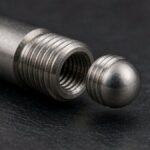
- Internal thread: the end screws inside the post — smooth surface, no exposed screw to scratch tissue. The gold standard for initial piercings. See our full comparison in internal vs external vs threadless.
- External thread: threads cut into the post itself; acceptable for budget lines but not recommended for fresh piercings. We do not manufacture external thread for this reason.
If you sell interchangeable tops and bases, remind customers that threadless ends are brand-compatible only within tolerance — our pins are machined to a consistent hardness curve so they seat with an audible click, not a loose wobble.
Common Ordering Mistakes We See
- Everything in 8 mm. Comfortable default, but nostril buyers need 6–6.5 mm and lip buyers need 10 mm. Balance the spread.
- Confusing barbell length with labret length. A “10mm labret” order that arrives as 10 mm of post is right; 10 mm of total length including top is not how the industry measures. Our listings always specify post-only length.
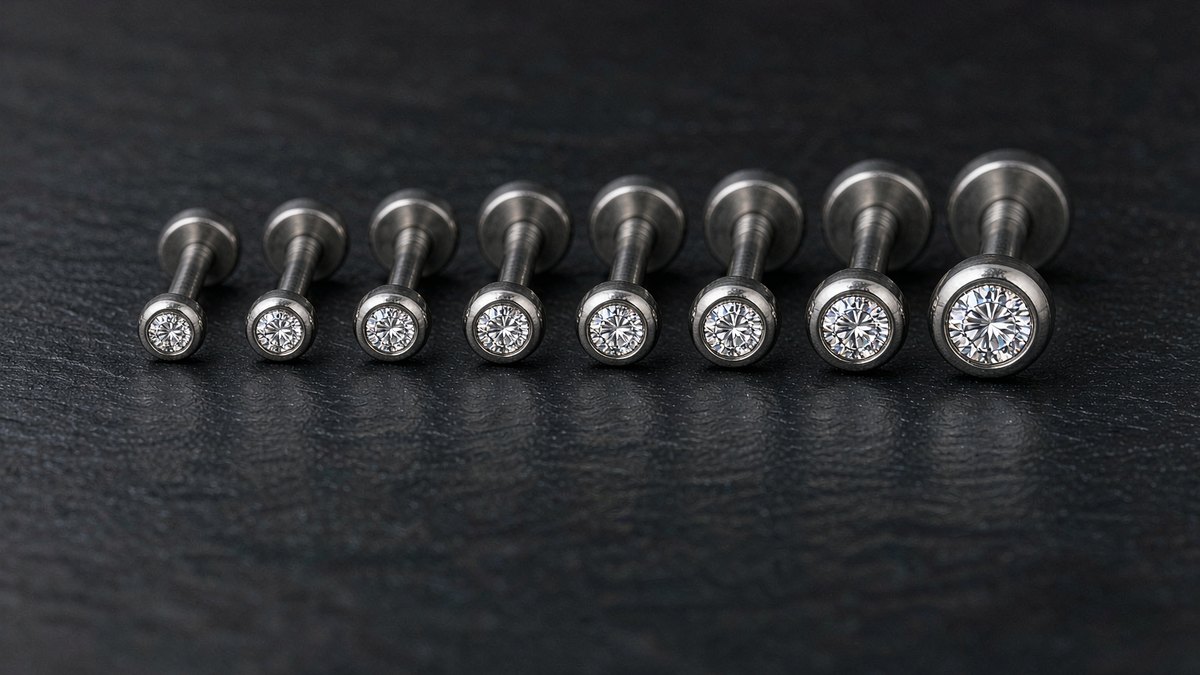
- Ignoring disc diameter. A 2.5 mm disc on a lip labret migrates; an oversized disc on a nostril looks clunky. We default to 3 mm discs for facial, 4–4.5 mm for lips.
- Not upselling the “downsize” pair. Studios buy initial + healed lengths together; retail buyers should be nudged to the same habit.
Quick-Start Assortment for a New Stockist
If you are placing a first labret order, this configuration covers the market minimum: 16G × 6 mm / 8 mm / 10 mm in ball, CZ-prong and opal tops; 18G × 6.5 mm for nostril; 20G × 6 mm if you serve the EU; 14G × 12 mm for lip work. That is 5 SKUs × 3 top styles = 15 configurations — trivially achievable with our 10-piece mixed MOQ. Start from the labret catalog and use the size filters to build the list, then check tier pricing and MOQ terms before checkout.
Frequently Asked Questions
Is a longer labret better for healing?
Fresh piercings need 1–2 mm of extra room for swelling, but excess length causes migration and snagging. Studios normally downsize to the healed length after 4–8 weeks.
What length for a nostril piercing?
6–6.5 mm for 20G–18G nostril studs is correct for most anatomy. If in doubt, 6.5 mm — slightly long beats slightly short for comfort and drainage.
Are labret posts measured including the top?
No. Industry convention measures the bar/post only, from disc to end. Decorative tops add their own height on top of that.
Can I mix lengths and gauges in one wholesale order?
Yes — our MOQ is per style, not per size. You can combine 6/8/10 mm and 16G/18G/20G freely across the 10-piece minimum of any single design.
Which material is best for labrets?
ASTM F136 G23 titanium — nickel-free, lightweight and safe for fresh piercings. Every labret we ship is implant-grade titanium; see our F136 vs 316L comparison for why we dropped steel entirely.
The Bottom Line
Post length is a merchandising decision, not just a technical one. Stock the 6/8/10 mm spine, add 6.5 mm nostril and 12 mm lip lengths, and label everything in both gauge and millimeters. Your return rate on labrets will drop to near zero — and repeat purchase rates rise, because customers who get the right fit come back for the tops.