



What Is ASTM F136 Titanium?
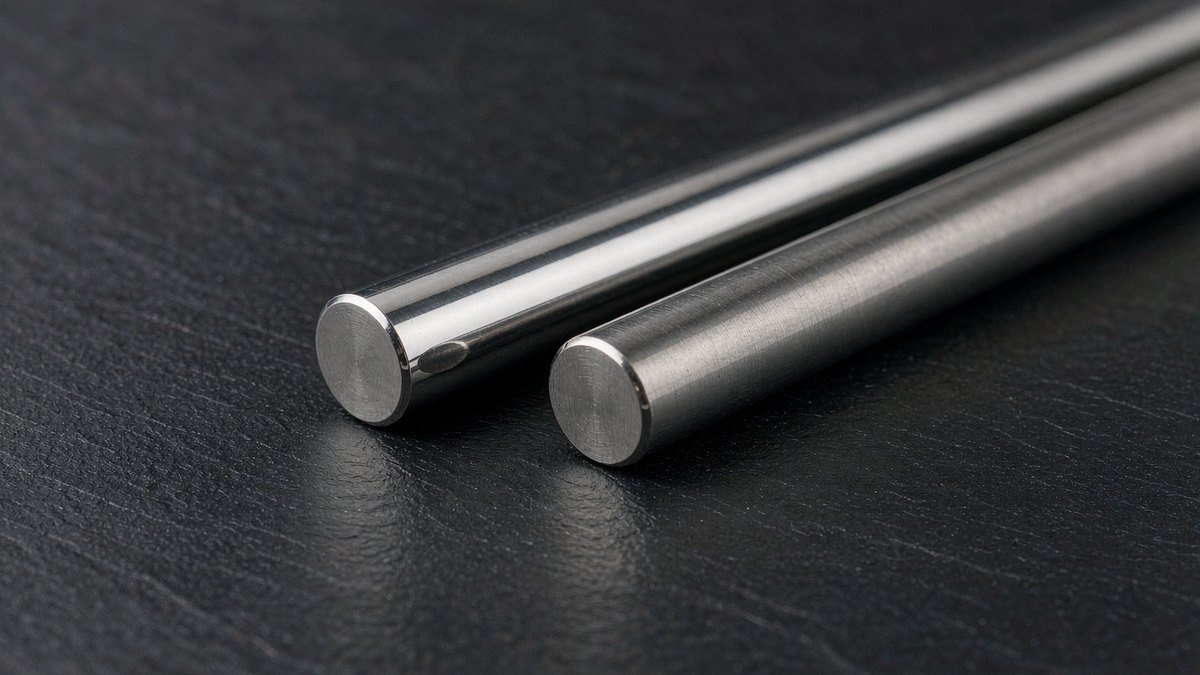
ASTM F136 is the implant-grade specification for wrought titanium-6aluminum-4vanadium (Ti-6Al-4V ELI), the same material family used in orthopedic implants, bone screws and spinal hardware. The “ELI” stands for Extra Low Interstitials — meaning the alloy contains tightly controlled levels of oxygen, nitrogen, carbon and iron. In practice, this gives the material better fracture toughness and, more importantly for body jewelry, far better corrosion resistance than any steel.
In the piercing industry, ASTM F136 is often called “G23 titanium” (Grade 23). It is one of only two materials — the other being ASTM F138 implant-grade stainless steel — approved by the Association of Professional Piercers (APP) for initial piercings in North America. If your customers include professional studios, F136 is not a nice-to-have. It is the material they ask for by name.
Key properties at a glance
- Nickel-free: F136 contains no nickel. 316L steel always does. This alone decides most EU and US studio purchases.
- Anodizable: titanium develops vivid oxide-layer colors (gold, rainbow, purple, blue, black) without any plating or lacquer.
- Lightweight: roughly 60% the density of steel — noticeable comfort on septum, navel and industrial jewelry.
- Biocompatible: the body does not react to the oxide surface, which is why it is trusted for permanent implants.
What Is 316L Surgical Steel?
316L (ASTM F138 when it is the implant-grade version) is an austenitic stainless steel containing 16–18% chromium, 10–14% nickel and 2–3% molybdenum. The “L” means low carbon, which improves weldability and reduces carbide precipitation. It has been the workhorse of the piercing industry for decades: cheap, easy to machine, takes a high polish and is strong enough for any thread style.
The catch is nickel release. 316L contains 10–14% nickel by weight, and although the chromium oxide passivation layer locks most of it in, some nickel always migrates to the skin surface, especially in fresh piercings where tissue fluid is present. The EU Nickel Directive limits nickel release to 0.2 µg/cm²/week for piercing post assemblies — quality F138 steel passes, but cheap “surgical steel” from uncontrolled factories very often does not.
Head-to-Head Comparison for Wholesale Buyers
| Property | ASTM F136 Titanium (G23) | 316L Surgical Steel |
|---|---|---|
| Nickel content | 0% — safe for nickel allergies | 10–14% — nickel release possible |
| Initial piercings | APP-approved | APP-approved (F138 only) |
| Corrosion resistance | Excellent, immune to chlorides in normal use | Very good, but pitting possible with long wear |
| Weight | Light (4.4 g/cm³) | Heavy (8.0 g/cm³) |
| Color options | Anodized colors without plating | Color requires PVD or plating over steel |
| Unit cost | Higher (harder to machine) | Lower |
| Allergy returns | Near zero | Main source of irritation complaints |
Which One Should You Stock?
For a modern wholesale operation the answer is no longer either/or — it is a tiered assortment:
Stock F136 titanium for:
- Every high-value position: nostril, septum, helix, forward helix, conch, tragus, philtrum, daith and navel. These are the placements where customers pay premium prices and where an allergy complaint costs you a repeat buyer.
- All anodized color lines. Titanium colors are structural (the oxide layer is part of the metal), so they cannot chip the way PVD can. Browse our wholesale titanium nose rings and septum jewelry for examples across 20G–16G.
- Long-wear heals: navel and industrial piercings live through sweat, friction and moisture for months. Titanium’s chloride immunity shows its value here — see our titanium navel rings and industrial barbells.
- EU/UK-bound orders where nickel compliance documentation may be requested.
316L/F138 steel still makes sense for:
- Budget bulk lines where price per unit dominates — e.g. basic ball-closure rings in 20G for promotional multipacks.
- Healed-piercing fashion jewelry in markets where nickel sensitivity is less of a selling argument.
- Component weight requirements: some customers prefer the heft and dangle behavior of steel in hoops.
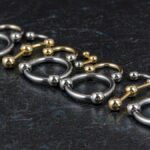
At TitanPierce we manufacture exclusively in ASTM F136 G23 titanium — the entire catalog, from flat-back labret studs to straight and curved barbell bases, is built on implant-grade material with full traceability.
How to Verify You Are Actually Getting F136
Unfortunately, “titanium” on an invoice does not guarantee implant grade. Some factories sell commercial-purity G1/G2 titanium (softer, duller, lower fatigue strength) or even titanium-coated steel as “G23”. When qualifying a supplier:
- Ask for the mill certificate referencing ASTM F136 and a heat/lot number.
- Request third-party test reports (SGS or TÜV) for composition — the aluminum 5.5–6.5% and vanadium 3.5–4.5% ranges are the fingerprint of Ti-6Al-4V ELI.
- Check the polish and thread quality. True G23 machines beautifully; counterfeit material shows chatter marks and thread burrs that damage threading during repeated assembly.
- Anodize-test a sample. F136 produces clean, repeatable colors at predictable voltages; impure material gives muddy, inconsistent tones.
Frequently Asked Questions
Is G23 the same as ASTM F136?
Yes. “G23” is industry shorthand for Grade 23 titanium, whose implant-grade specification is ASTM F136. Reputable suppliers use the two terms interchangeably.
Can people with metal allergies wear 316L steel?
Many people tolerate F138 implant-grade steel in healed piercings, but nickel-sensitive customers frequently react. F136 titanium contains no nickel and is the standard recommendation for sensitive skin — which is why we do not sell steel at all.
Does titanium rust or tarnish in seawater or pools?
No. F136’s passive oxide layer is stable in chlorine and salt water, making it ideal for beach and swim-season retail. Anodized colors are also unaffected.
Why is F136 more expensive than steel?
The alloy is harder to machine, tools wear faster, and the ELI melt specification costs more at the mill. For wholesale buyers the premium is typically recovered by fewer allergy returns, higher perceived value and stronger margins on studio-grade lines.
The Bottom Line
If you are building a catalog for studios, professional piercers or quality-focused retail, ASTM F136 G23 titanium should be the default material for at least 70% of your SKUs, with steel reserved for price-entry lines. The margin difference at wholesale is small; the difference in customer complaints and brand perception is not.
View our wholesale program to see MOQ, tiered pricing and the full F136 catalog — every listing states the exact material grade, so your team never has to guess.