




Why Sterilization Knowledge Sells Jewelry
If you wholesale to professional studios or informed retail customers, questions about sterilization and aftercare come with every serious order. Answering them accurately is not just service — it positions you as the supplier studios trust with their clients’ health. This guide covers what actually happens to jewelry between the factory and the piercing needle, and how customers should care for titanium afterward.
First, a Key Distinction: Sterile vs Clean vs Disinfected
- Clean: visible dirt and oils removed (soap and water).
- Disinfected: most pathogens killed (alcohol, chemical wipes).
- Sterile: all viable microorganisms eliminated, verified and maintained in sealed packaging.
Only sterilization is acceptable for initial piercings — a procedure that creates a fresh wound. Jewelry for healed piercings needs only to be clean and disinfected, which is why the retail aftermarket exists at all.
How Jewelry Is Sterilized Professionally
Autoclave (steam under pressure)
The industry standard: 121–134 °C saturated steam at pressure, cycles of 3–30 minutes depending on program. Properly machined titanium jewelry — implant-grade ASTM F136, smooth polished surfaces, no crevices — tolerates repeated autoclaving without damage. Anodized colors are stable through standard cycles (see how anodizing works); only extremely aggressive long programs may shift shades slightly.
Dry heat and chemical sterilants
Used where autoclaves are unavailable. Titanium is chemically inert, so it survives glutaraldehyde and hydrogen peroxide plasma cycles well. Plated jewelry cannot say the same — sterilant chemicals attack coatings, which is one more reason professionals specify titanium (see why surface finish matters).
What cannot be sterilized
Jewelry with organic materials (wood, horn, certain stones), glued elements, or porous finishes cannot be reliably sterilized. Every component in our catalog — labrets, nose and septum, navel rings — is all-metal F136 titanium with prong or bezel-set stones: autoclave-safe by construction.
Pre-Sterilization Cleaning: The Step People Skip
Sterilizers do not remove debris; they kill what is on the surface. Any organic residue left on jewelry shields bacteria from steam. Proper workflow:
- Wash with neutral pH detergent and warm water, using a soft brush in threads and pin holes.
- Rinse thoroughly with distilled or purified water.
- Dry completely — residual water causes spotting and interferes with packaging seals.
- Inspect: check threads for debris, stones for security, surfaces for polish defects.
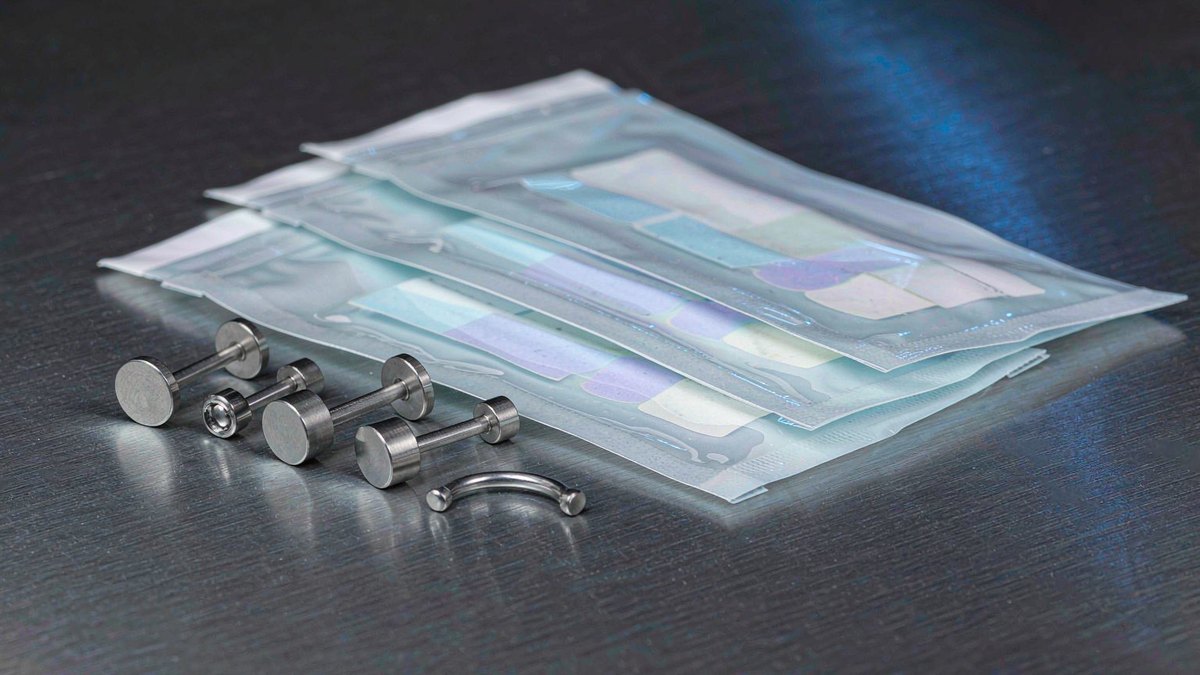
- Pouch and autoclave in validated sterilization pouches, labeled with cycle and date.
Home Care: Advising Your Retail Customers
For jewelry being placed in healed piercings, home cleaning is sufficient. The advice we give wholesale partners to pass on:
- Wash hands first. Always.
- Soap and warm water with a soft brush for threads and crevices, then rinse and dry — this handles daily buildup.
- Alcohol wipe down (70% isopropyl) for a quick disinfect between rotations; let it evaporate fully before wearing.
- Avoid chlorine bleach and silver dips: unnecessary for titanium, harmful to stones and to any coated finishes.
- Store pieces separated in sealed bags — bemusing that tangled jewelry scratches stones.
For fresh piercings, jewelry hygiene is only half the story: the piercing itself needs saline cleaning twice daily, no rotating, no swimming during initial healing, and professional downsizing after swelling subsides (see the length logic in our labret length guide). Recommend that customers with fresh piercings consult their piercer before changing jewelry themselves.
Aftercare by Placement: Quick Reference
| Placement | Typical healing time | Care emphasis |
|---|---|---|
| Earlobe | 6–8 weeks | Low effort; keep hair products away |
| Cartilage (helix, conch, tragus) | 6–12 months | Patience; avoid sleeping pressure and earbuds |
| Nostril | 4–6 months | Saline twice daily; watch glasses and mask straps |
| Septum | 2–3 months | Keep it tucked initially; saline rinses |
| Navel | 6–12 months | Loose clothing; watch waistbands and friction |
| Lip / labret | 2–3 months | Rinse after eating; check back disc seating |
Answering the Questions Buyers Actually Ask
“Is this jewelry sterile out of the box?”
Factory-new jewelry is clean but not sterile. Studios autoclave before initial use; retail customers changing healed piercings do not need sterility — good cleaning is enough. If your market expects pre-sterilized blister packs, that is a value-add service your fulfillment can offer with a benchtop autoclave.
“Can I autoclave anodized titanium?”
Yes — standard cycles do not harm the oxide color. Avoid prolonged exposure to strong alkalis in the cleaning stage.
“Why does my piercer insist on titanium?”
Because F136 is nickel-free, autoclave-proof and accepted for initial piercings by the APP. It is the least likely material to cause a reaction during healing — see F136 vs 316L.
“How do I clean the threads?”
Soft brush, soap, warm water — pay attention to the tapped hole on internally threaded bars where soap film collects. Rinse and dry fully.
“Does the jewelry need replacing after healing?”
Usually yes, for fit: fresh-piercing lengths are 1–2 mm longer than healed anatomy wants. Downsizing is an upsell opportunity — stock both lengths per the size guides.
Turning Aftercare Into Revenue
- Bundle aftercare (saline spray, cleaning brushes) with jewelry orders.
- Publish a care guide on your own store — it ranks in search and answers pre-sale objections.
- Stock downsizing lengths so the second purchase happens with you, not a competitor. Start from the replacement parts and post categories.
- Use our FAQ (titanpierce.com/faq) and wholesale program pages as references for your own customers.
The Bottom Line
Sterilization is where wholesale suppliers prove they understand the piercing profession, not just manufacturing. All-metal F136 titanium jewelry survives every professional workflow, needs no special treatment for retail customers, and never triggers the coating-wear complaints that plague plated lines. That combination — health-grade material plus zero-maintenance color — is exactly what your most valuable customers are shopping for.